
Fisherman’s Bastion – The Fairytale Lookout of Budapest
Fisherman’s Bastion – The Fairytale Lookout of Budapest
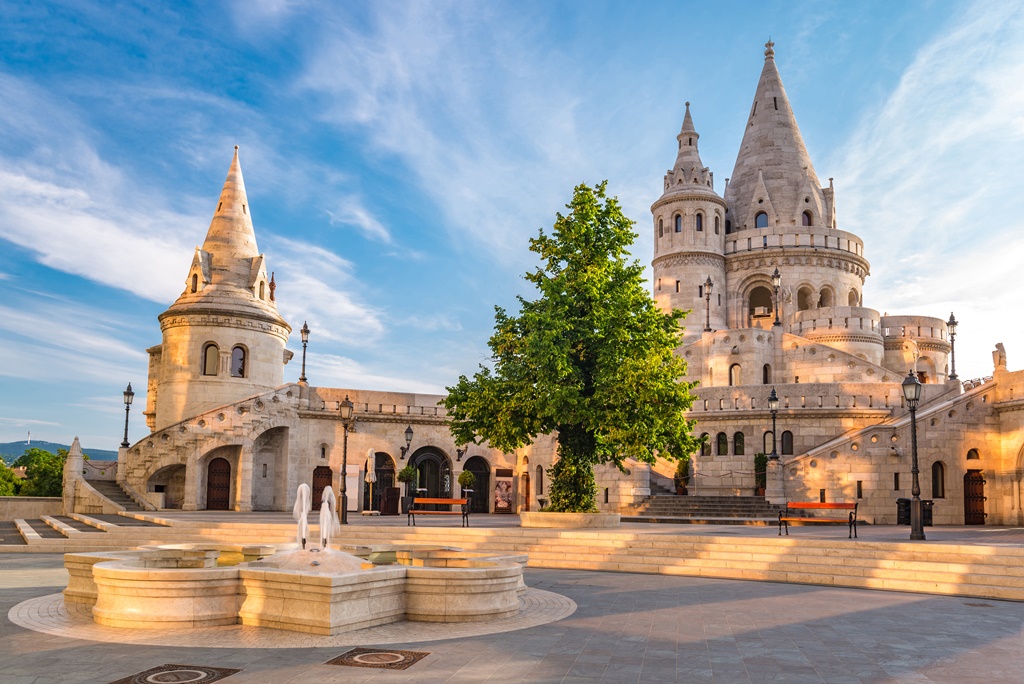
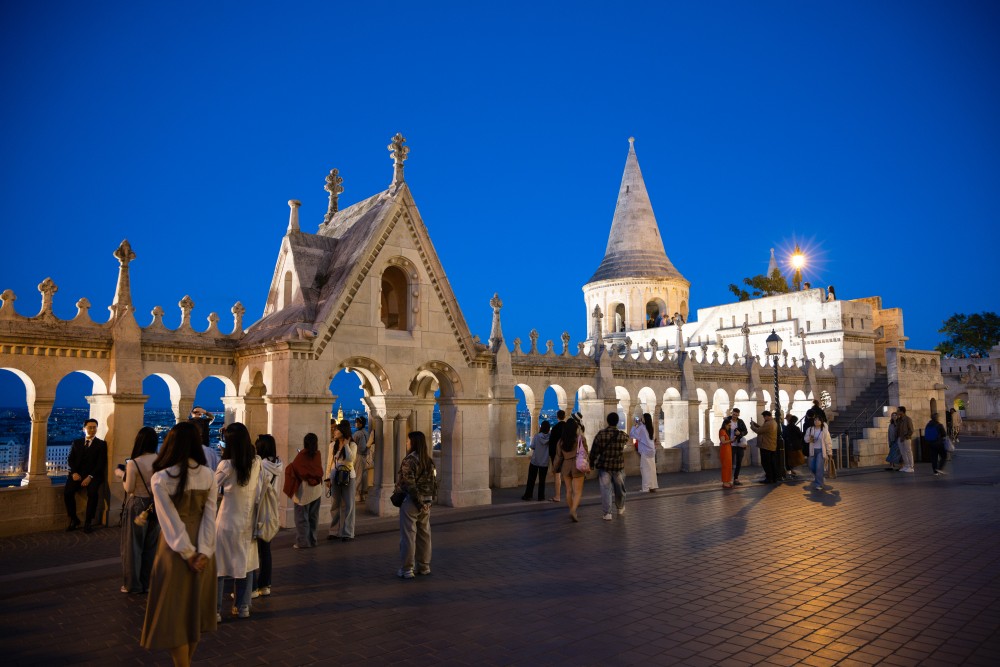
The beautiful, castle-like structure rising above the city on Castle Hill is the Fisherman’s Bastion (Halászbástya) — one of Budapest’s most iconic landmarks. Standing about 70 meters above the Danube, it’s easily visible from the Pest side and forms part of the enchanting Buda Castle District, a UNESCO World Heritage Site since 1987.
–
The Buda Castle District is famous for its charming baroque and neo-classical buildings, historic churches, and cobblestone streets. Getting to the top of the hill is simple — you can walk, take bus number 16, or ride the historic Castle Hill Funicular, which offers wonderful views along the way.
–
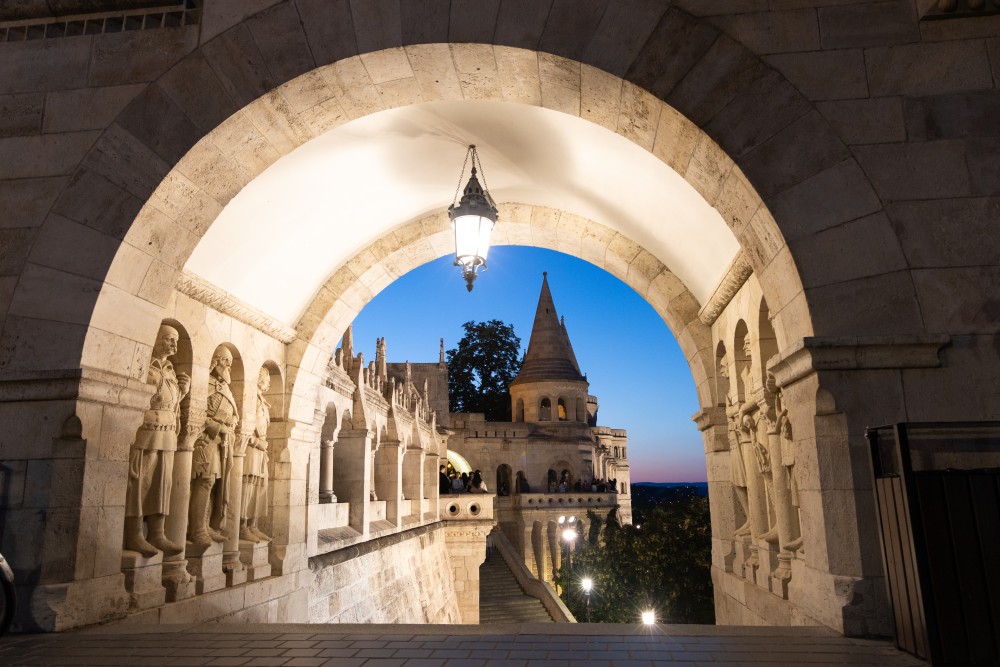
The Fisherman’s Bastion itself is a neo-Gothic and neo-Romanesque lookout terrace designed by the renowned Hungarian architect Frigyes Schulek, who also worked on many of Budapest’s finest buildings. Construction took place between 1895 and 1902, during a time of national celebration. In 1896, Hungary marked the 1000th anniversary of the land-taking of the Magyar tribes in the Carpathian Basin. To commemorate this, the Bastion’s seven towers were built to symbolize the seven tribes that founded the Hungarian nation.
–
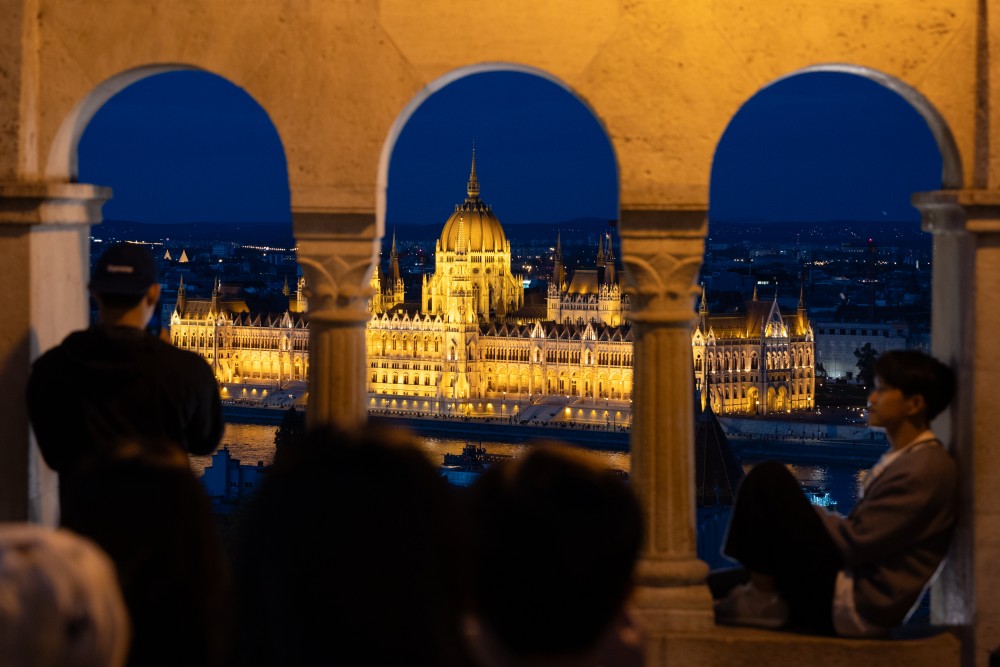
Despite its fortress-like appearance, the Fisherman’s Bastion was never intended for military defense. Instead, it was built as an ornamental terrace offering breathtaking panoramic views of Budapest. From its balconies, visitors can admire the Hungarian Parliament Building, the Danube River, and the entire Pest side in all its splendor.
–
The monument takes its name from the guild of fishermen who, according to legend, defended this stretch of the castle walls in the Middle Ages. In those days, a small fishing town stood beneath the Bastion — even today, many nearby streets are named after fish or fishing terms, keeping this heritage alive.
–
During World War II, the structure suffered severe damage, but due to its popularity, restoration became a priority in the years following the war. Today, it remains one of the most visited and photographed sites in Budapest.
–
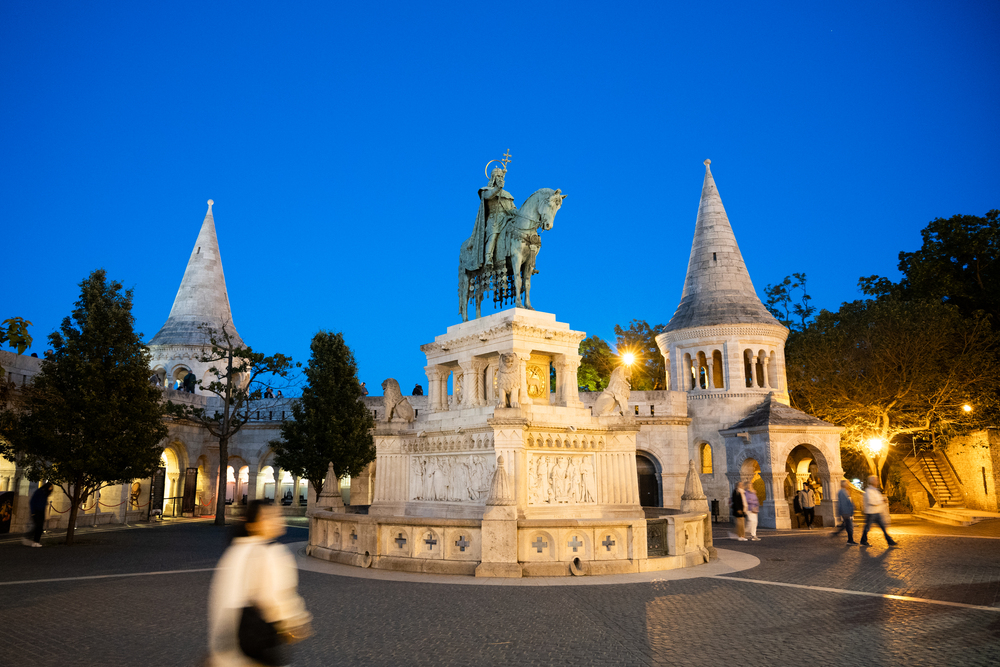
In front of the Bastion stands the equestrian statue of St. Stephen (Szent István), the first king of Hungary, who ruled from around 1000 to 1038. His bronze figure looks over the city he helped establish as a Christian kingdom. Nearby, next to the Matthias Church, visitors will also notice the elegant Hilton Budapest Hotel, built on the site of a 13th-century Dominican monastery, with some of the original ruins still visible inside.
–
The Fisherman’s Bastion is more than just a lookout point — it’s a fairytale-like symbol of Budapest, blending history, legend, and stunning architecture into one unforgettable panorama.
–
If you’d like to visit Fisherman’s Bastion and hear the fascinating stories behind it, join our Buda Castle Tour — an inspiring walk from Fisherman’s Bastion to the Royal Palace, guided by locals who bring the history of Castle Hill to life.




Related Tours

BUDA CASTLE: FROM FISHERMAN'S BASTION TO ROYAL PALACE
FREE
Discover the Royal Palace, Fisherman’s Bastion, residential side and hidden gems of the Buda Castle hill. With a local guide, you’ll relive history, enjoy the best views of Budapest, and see how past and present blend in this charming neighborhood.
- Starts every day!
- Starts at: 3:00 pm
- Duration: 2 hours
- Meeting: Matthias Church
- 3 EUR booking cost